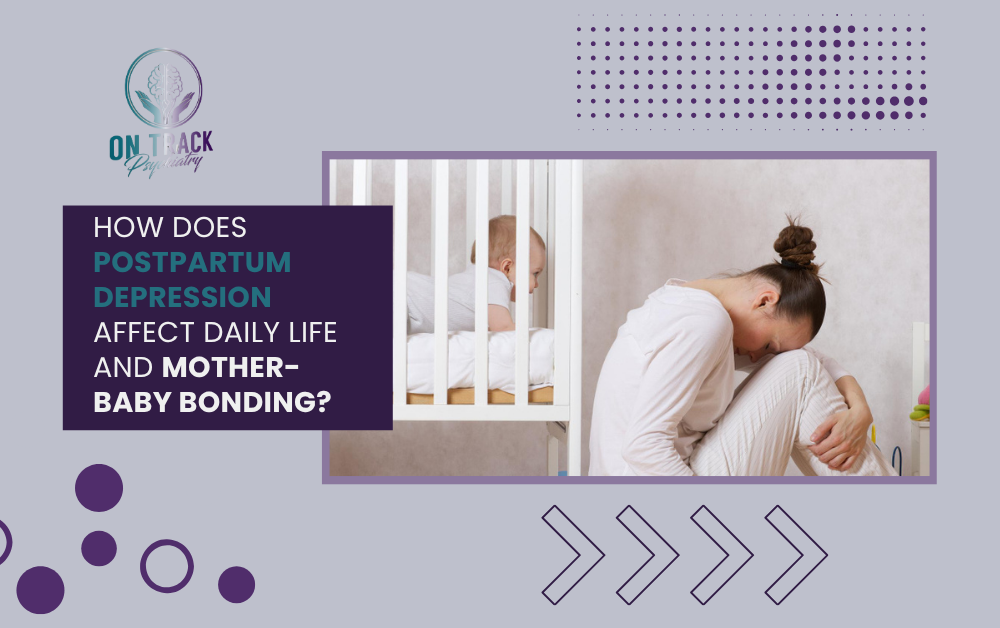
Having a new baby is a big change. Some moms feel happy and tired. Some moms feel sad and worried. When these sad feelings last and make life hard, this may be postpartum depression.
At On Track Psychiatry, we help moms understand these feelings and learn that they are not alone.
Below, we will clarify how postpartum depression can affect routine life and the tie between a mother and her newborn. It will also tell you how help can make things better.
Understanding Postpartum Depression
Postpartum depression begins after delivery. It can start soon after birth or a few months later.
A mother might feel quite gloomy, anxious, or hollow. She may not feel like herself.
Some mothers cry easily. Some feel no energy at all. Some feel guilty even when they have done nothing wrong.
PPD is not the same as the baby blues. The baby blues are short and usually pass in two weeks. PPD lasts longer and needs care, love, and support.
At On Track Psychiatry, we teach moms that asking for help shows strength, not weakness.
How Postpartum Depression Can Change Daily Life
PPD makes daily tasks difficult. It changes daily life in these ways:
- Sleeping and Eating
Mothers may experience changes in sleep or appetite.
- Energy and Care
Basic tasks such as putting on clothes, preparing a bottle, or swapping a diaper can seem overwhelming.
- Worry and Fear
A mom may feel very worried about the baby or have frightening thoughts.
- Loss of Joy
Things that used to feel fun may feel empty. A smile may feel difficult.
- Social Pullback
She may not want visitors or help. She may feel alone even in a room with others.
These changes make the day feel heavy and slow. They can make caring for the baby feel scary.
At On Track Psychiatry, we help moms understand that PPD makes life feel this way, but with support, these feelings can change.
How Postpartum Depression Can Affect Bonding with the Baby
Bonding is the loving connection between the mother and the baby. It makes the baby feel secure and the mother feel close to her baby. PPD has the potential to complicate this bonding.
Less Smiling and Eye Contact
The PPD mother may fail to smile or even to look at the eyes of her child. The baby is deprived of these loving experiences that teach him how to trust. Less
Touching and Holding
Touch helps babies feel safe. Skin-to-skin time may feel hard for a mother with PPD. Babies need gentle touch to grow and feel comforted.
Trouble Feeding the Baby
Feeding the baby can become stressful. A mother may feel too tired or upset to feed calmly. This can make feeding times less peaceful.
Little Playtime
PPD mothers might lack the energy to play, talk, and sing. Babies gain knowledge through small plays, and therefore their absence can slow down the bonding process.
Not Feeling Connected
Moms with PPD may experience a disconnection from their newborn. They may feel bad, but they need help, not blame.
Ways to Feel Better and Keep the Bond Strong
There are simple, kind steps that can help:
- Talk to someone. Share your feelings with a friend, partner, or doctor. Talking helps.
- Small acts matter. One deep breath. One short walk. One moment of skin-to-skin with your baby can help.
- Rest when you can. Sleep is hard with a baby, but rest helps your mind heal.
- Ask for help. Have others contribute meals, do the washing, or take care of the little one for a bit.
- Try therapy. Talking with a trained person can teach new ways to cope.
- Medicine can help. Some medicines make a big difference. New options are available, and your provider can discuss them with you.
At On Track Psychiatry, our board-certified Psychiatric Mental Health Nurse Practitioners, Tondalaya Sanford and Michelle Arshinkoff, explain each option clearly and help moms choose what is right for them.
How On Track Psychiatry Supports Moms with Postpartum Depression
At On Track Psychiatry, we focus on providing moms with a safe and caring space to discuss their feelings.
Our team listens with respect. We do full evaluations to have a clear picture of the symptoms, medical history, and needs of the mothers.
We develop a strategy to address every mother’s requirement. Therapy, guidance, and treatment options help her regain balance.
Healthy mothers make healthy families. We support mothers so they can heal, grow, and bond with their baby.
A Kind Closing Note
Postpartum depression is tough, but it is manageable. With care, small steps, and support, life can feel brighter. Bonding with your baby can grow again. You deserve help and kindness.
If you want support or talk with a caring provider, On Track Psychiatry is ready to listen and help you find the next steps.
FAQs
Is postpartum depression normal?
It is common, and many mothers experience it. It is a medical condition that needs care.
Is postpartum depression the same as baby blues?
No. Baby blues last a few days and are mild. Postpartum depression is stronger and lasts longer. It needs care and support.
Can postpartum depression go away on its own?
It may get better over time, but it is safer to get help. Support makes healing faster and easier.